Show original
Try the app

ガチャガチャファクトリー
Enjoyed this article?
Support co heppo
Share
AI translation
I set out to create a lightweight app, but just the settings screen alone took about three and a half years. This is a story about how the project expanded into building a full-fledged web gacha game with the mindset of "Hey, we can do this too!", and how I discovered what I really wanted to create while wrestling with AI along the way.
Try the app
ガチャガチャファクトリー
Enjoyed this article?
Support co heppo
"I want to create something by clicking lots of buttons on a screen."
That's how I started making Web Gacha.
Initially, it was supposed to be a lighter app, but...
Just creating the settings screen took about 3 and a half years.
How did this happen?
This time, I'll write about how "Gacha Gacha Factory" came to be during development, and how I've been creating it together with AI.
I had previously created a WEB gacha at my company.
When I researched it back then, there were free services to create gacha. But for me, I wanted to pay a bit more attention to the appearance and presentation.
On the other hand, if I tried to develop it from scratch for our own use, it would cost quite a bit.
That's when I thought:
"If there was something that looked fun and was more affordable to use, wouldn't it actually work?"
Rather than aiming for a huge market, it felt like I had found just the right gap.
Then one day, while watching an anime, I heard a line about wanting to touch a screen with lots of buttons, and I suddenly thought:
Pressing buttons, changing settings, and gradually creating something you love. That kind of app would be fun, I thought.
That's when the gacha I had made before connected with that desire to "click around."
Making gacha is fun, but what if making gacha could also be fun for the creator?
So I started by creating the settings screen first.
Initially, I intended to make a lighter app.
I had various features I wanted to include from the start, but I had already compromised on things, thinking "this seems too difficult for me" or "I guess I have to give up here."
But when I tried making it while consulting with AI, those things I thought "I can't do" gradually started to seem possible.
"Oh, I can do this too!"
Once that happens, my desire to do things expands from there.
"If I can do this, I can do that too!"
Once something works, the next idea comes up.
When I try it, it's interesting again.
You know how when you're making something, you end up going "I want to do this and that too"? I completely fell into that state (laughs).
It became fun, and I kept adding more features.
As a result, most of the development time went into the settings screen.
I was supposed to be making gacha, but I was making the gacha settings screen the whole time.
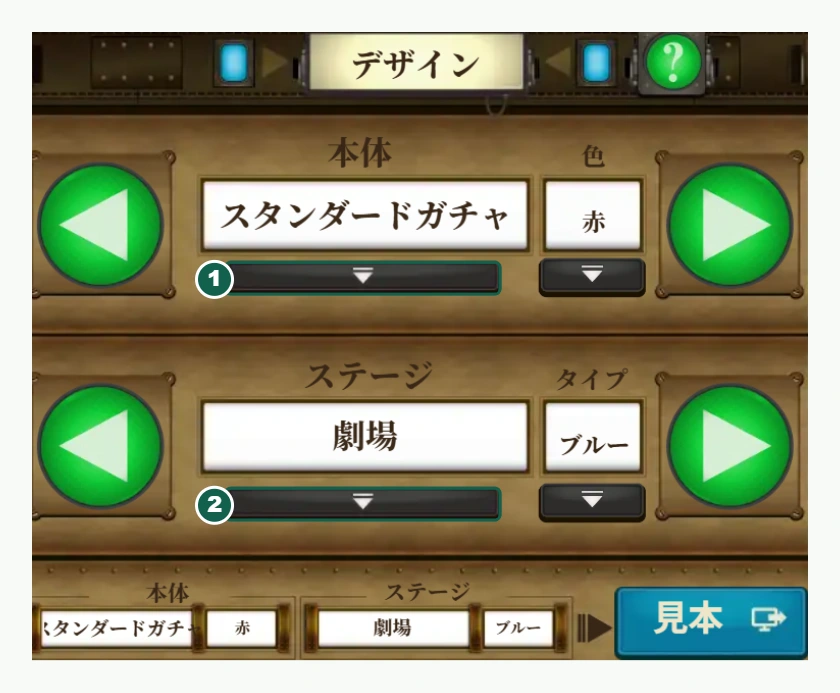 Part of Factory Mode. This is the kind of button I wanted to click around with.
It's fun to add features, but each time, I kept thinking in my head:
"I might be able to make it so you can at least configure this. But with my abilities, I don't think I can make it easy to use ><"
I know how it works, so I can use it.
But when someone opens it for the first time, where would they even start?
The creator understands it, but...that kind of thing.
I started making it because I wanted to click lots of buttons, but I ended up worrying about the sheer number of buttons (laughs).
So I decided to keep the detailed settings screen as "Factory Mode," and create a separate "Step Mode" where you can configure things by progressing through steps.
So that both people who want to tinker and create, and people who want to configure things step by step, can use it.
I realized the difference between making something fun to touch and making something easy for others to use, while actually creating it.
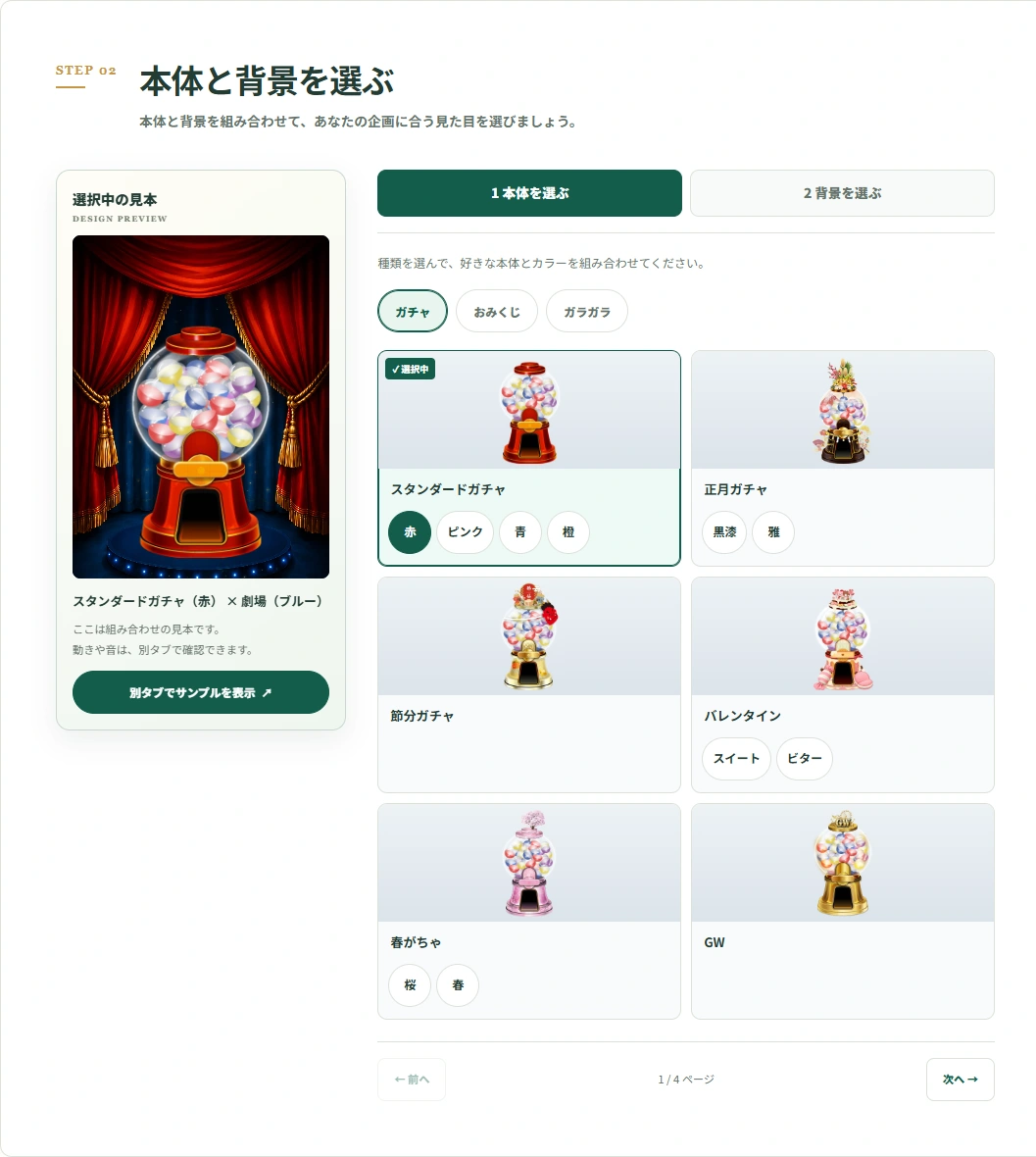 This is Step Mode. I also created an entry point where you can configure things by progressing step by step.
Factory Mode development took about 3 and a half years.
Everything else came together in about the last half year.
There's the compatibility with my strengths, but what made a big difference was being able to use agent-type AI.
Not only getting answers to my questions, but actually looking at files and helping with code corrections and verification. The pace of development changed dramatically.
The gacha presentations I used to make with Adobe Animate and JavaScript are now being remade using Godot.
Looking back, I think this service was created alongside AI's growth.
However, it wasn't all smooth sailing and friendly collaboration.
Something I explained once would be forgotten the next time.
Problems I thought I fixed would come up again.
When I ask "Could we do something like this?" they confidently say "Yes, we can!"
But it doesn't work at all.
"You said you could do it just now!"
If you're making something with AI, you might recognize this exchange. I don't even know how many times I've done it (laughs).
Back then, I used to say things like "AI tells lies with a straight face." That's how much the confidence in the responses and the actual results didn't match.
We'd go in circles with the same problem and not make progress for a while.
Still, by consulting about "I want to make this," I gradually shaped it into something.
Looking at the progress over the last half year, I feel like the person I was fighting with has become quite reliable.
And as I continued the exchanges, I started thinking about something else.
This might be something many people have already said, but I sometimes think that creating something through dialogue with AI is also a form of dialogue with yourself.
"I asked AI, but didn't get good results. AI really is just AI, huh."
I hear that kind of talk sometimes. I've thought that too.
But when I think about it later, there were times when I myself hadn't clearly figured out what I wanted to make.
"Something's off."
But I can't quite explain what's off or what I want to do.
If I stop there, what I was looking for also ends up vague.
Of course, there are things AI can't do well, but in my case, I was also giving up before that point.
"So what's different?"
"What did I think was good?"
While trying to explain that, I gradually start to see what I want to make.
I was supposed to be explaining it to AI, but it feels like I'm explaining to myself what I wanted to make.
But this "explaining to someone else" is quite difficult.
I do it too—sometimes explaining well becomes a hassle, so I just settle for "this is fine," and give up.
When working with people, sometimes you feel like things aren't quite right yet, but the other person seems ready to wrap up too.
Saying "compromise" makes it sound like I made a proper decision, but in my case, I'm often just finding it harder to say more.
Like, it might make the atmosphere awkward if I say more.
For example, "Could you shift this just one more pixel?"
The person asking cares about it.
But the person being asked might think "Do I really have to fix it again...?"
Of course, I'm on both sides (laughs).
With AI, it's easier to say the "a little more" I would have swallowed out of concern for the other person's feelings.
"It's a bit off."
"I want to try again."
"Actually, the previous version was better, sorry—can you revert?"
They'll go along with that kind of exchange.
So at least I don't have to stop just because "it's too awkward to say more."
When I think about it that way, the one who's ultimately giving up with "this is fine" is me.
I can't always push that hard every time.
But the fact that I can try to explain one more time is something I appreciate about making things with AI.
I intended to make a light app, but before I knew it, about 4 years had passed.
In that time, what I wanted to make and what AI could help me with changed quite a bit.
What started expanding with "Oh, I can do this too!" finally became something people could use.
It's currently available as a beta version.
Toward the official release, I'm fixing bugs and improving usability while adding new gacha machines.
...Actually, "I want to make this too" is still going on (laughs).
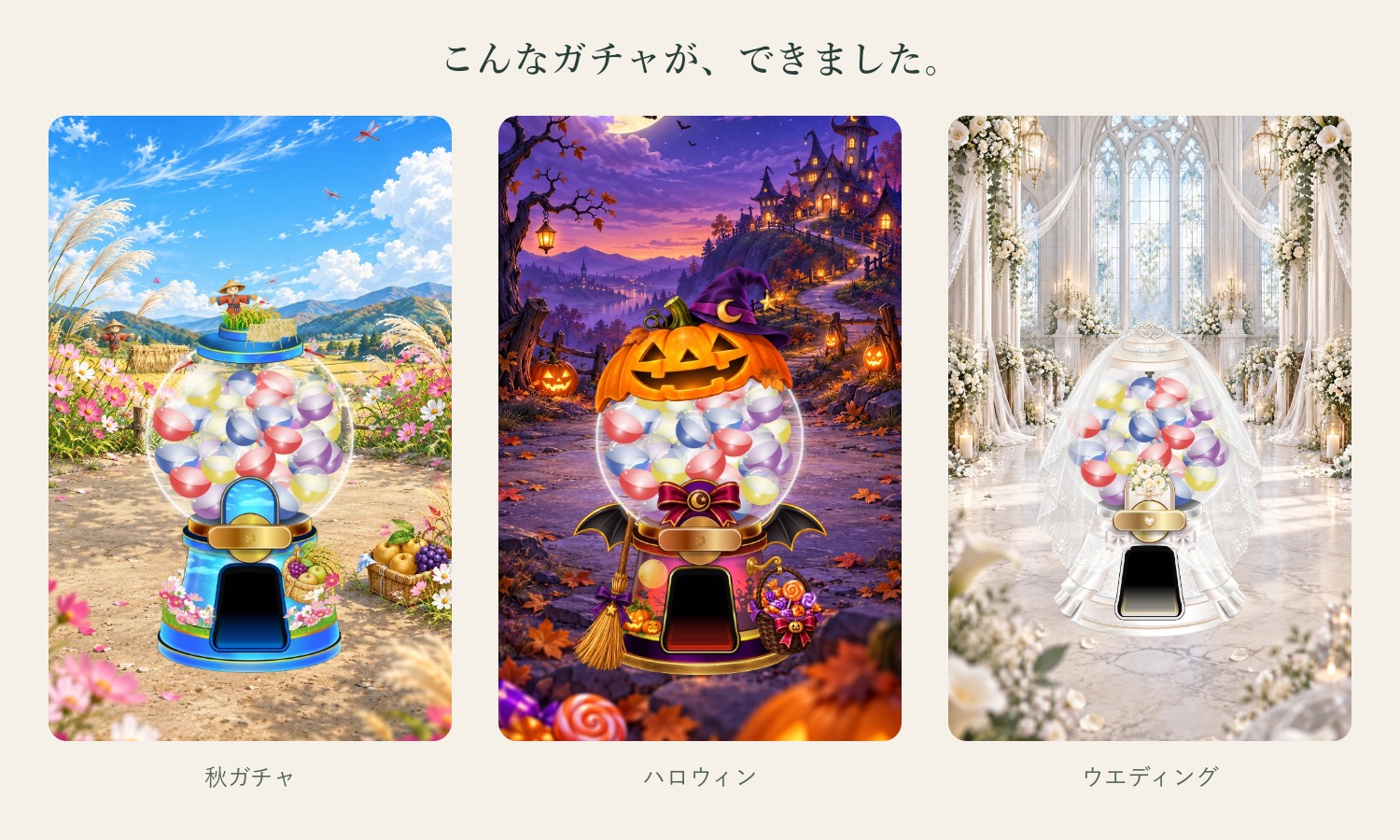 An example combining the main unit and background. Gacha machines matching seasons and events have increased.
I'd be happy if what I started making because I wanted to "click lots of buttons" leads to someone's "I want to try making gacha like this."
We've also released free samples, so please try spinning a gacha that interests you first.
I got absorbed in clicking around on the creator side, but I'd be happy if people enjoy spinning them too (laughs).
I also introduce new machines and development updates on X and Facebook. I'd be happy if you'd stop by casually 😊
「ボタンがいっぱいある画面を、ポチポチしながら何か作りたい」
そんな気持ちから、Webガチャを作り始めました。
最初は、もう少し軽いアプリになる予定だったのですが…
設定画面を作るだけで約3年半。
どうしてこうなった。
今回は、開発中の「ガチャガチャファクトリー」ができるまでと、AIと一緒に作ってきた話を書いてみます。
以前、会社でWEBガチャを作ったことがありまして。
そのときにいろいろ調べてみると、無料でガチャを作れるサービスはある。でも、自分としては、見た目や演出にもう少しこだわりたい。
かといって、自社用に一から開発しようとすると、結構コストがかかる。
そこで思ったんです。
「見た目も楽しめて、もっと手頃に使えるものがあったら、意外といけるんじゃない?」
すごく大きな市場を狙うというより、ちょうどいい隙間を見つけたような感覚でした。
そんなある時、あるアニメを見ていて、ボタンがいっぱいあるのを触りたいというセリフが耳に入り、ふと思ったんです。
ボタンを押したり、設定を変えたりしながら、自分の好きなものができていく。そんなアプリがあったら楽しそうだな、と。
そこで、以前作ったガチャと、その「ポチポチしたい」が結びつきました。
ガチャを回すのも楽しいけれど、ガチャを作る側も楽しいものにできるんじゃないか。
そうして、まず設定画面から作り始めました。
最初は、軽めのアプリにするつもりでした。
もともと入れてみたい機能はいろいろあったんですが、「これは自分には難しそうだな」「ここは諦めるしかないかな」と、最初から妥協していたところもありました。
ところが、AIに相談しながら作ってみると、その「できないかな」と思っていたものが、少しずつ作れそうになってきたんです。
「あ、これもできるじゃん!」
そうなると、今度はそこからまたやりたいことが広がっていきます。
「これができるなら、こっちもできるじゃん!」
ひとつできると、次のアイデアが浮かぶ。
試してみると、また面白い。
作っていると、つい「あれもこれも」になっちゃうこと、ありますよね。自分もすっかりその状態でした(笑)。
楽しくなって、どんどん機能を増やしていきました。
その結果、開発時間の大半を使うことになったのが、設定画面です。
ガチャを作っていたはずなのに、ずっとガチャの設定画面を作っていました。
ファクトリーモードの一部。こういうボタンを、ポチポチしたかったんです。
楽しくて機能を増やしていくのですが、そのたびに、頭の中ではこう思ってました。
「これ、とりあえず設定できるところまでは作れるかもしれない。でも自分のちからじゃ使いやすいまで持ってくのは無理かもしれん><」
自分は仕組みを知っているから触れる。
でも、初めて開いた人は、どこから触ればいいんだろう。
作ってる本人にはわかるんだけど、というやつですね。
ボタンをいっぱい触りたくて作り始めたのに、そのボタンの多さで悩むことになりました(笑)。
そこで、細かく設定できる画面は「ファクトリーモード」として残し、順番に進めながら設定できる「ステップモード」を別に作ることにしました。
あれこれ触って作り込みたい人にも、順を追って設定したい人にも使ってもらえるように。
自分が触って楽しいものを作ることと、誰かが使いやすいものにすること。その違いを、作りながら実感しました。
こちらはステップモード。順番に進めながら設定できる入口も作りました。
ファクトリーモードの開発には、約3年半。
それ以外の部分は、ここ半年ほどで形になりました。
自分の得意分野との相性もありますが、大きかったのは、エージェント型のAIが使えるようになったことです。
相談に答えてもらうだけでなく、実際のファイルを見ながら、コードの修正や確認まで手伝ってもらえる。開発の進み方が、一気に変わりました。
以前はAdobe AnimateとJavaScriptで作っていたガチャの演出も、今はGodotを使う形に作り直しています。
振り返ると、このサービスは、AIの成長と一緒に作ってきたものだなと思います。
ただし、仲良く順調に作ってきたかというと、そうでもありません。
一度伝えたことが、次には抜けている。
直したはずの問題が、また出てくる。
「こんな感じにできないかな?」と聞くと、自信満々に「できます!」と言う。
でも、全然できない。
「さっきできるって言ったじゃん!」
AIと何か作っている方には、ちょっと見覚えのあるやり取りかもしれません。自分も何度したかわかりません(笑)。
当時は「AIは真顔で嘘をつく」なんて表現していました。それくらい、返事の自信と実際の結果がかみ合わないことがあったんです。
同じ問題をぐるぐる繰り返して、なかなか前に進まないこともありました。
それでも、「これを作りたい」と相談しながら、少しずつ形にしてきました。
ここ半年の進み方を見ていると、一緒にけんかしていた相手が、ずいぶん頼もしくなったな、と感じます。
そして、やり取りを続けるうちに、もうひとつ思うようになったことがあります。
すでにいろんな方が言っていることかもしれませんが、AIと対話しながら何かを作るって、自分自身と対話することでもあるんじゃないかな、と思うことがあります。
「AIにお願いしたけど、いいものが返ってこなくて。やっぱりAIだよね」
そんな話を聞くことがあります。自分も、そう思ってしまうことはあります。
でも、あとから考えると、自分の中でも作りたいものがはっきりしていなかった、ということがあるんですよね。
「なんか違う」はわかる。
でも、何が違うのか、どうしたいのかは、まだうまく言えない。
そこでやめてしまうと、自分の欲しかったものも、ぼんやりしたままで終わってしまう。
もちろん、AIがうまくできないこともあるんですが、自分の場合は、その手前で諦めていることもあるなと。
「じゃあ、どこが違うんだろう」
「自分は何をいいと思ったんだろう」
そうやって説明しようとしているうちに、だんだん自分の作りたいものが見えてくる。
AIに伝えるために考えていたはずなのに、自分が何を作りたかったのかを、自分に説明しているような感じです。
ただ、この「相手に説明する」って、結構大変で。
自分もよくあるんですが、うまく説明するのが面倒になって、もうこれでいいか、と諦めてしまうことがあります。
人と一緒に作っていると、まだしっくり来ていないけれど、相手もそろそろ終わりにしたそうだな、と感じることもある。
「妥協」と言うと、何かちゃんとした判断をしたような気になるんですが、自分の場合、単にこれ以上言いづらくなっているだけだったりします。
これ以上言うと、空気が悪くなりそうだな、とか。
たとえば、「ここをあと1pxずらしてほしい」。
言う側は気になる。
でも、言われる側になると「まだ直すの……?」と思うこともある。
自分ももちろん、どちらの側にもなります(笑)。
その点、AIには、相手の機嫌を気にして飲み込んでいた「もうちょっと」を言いやすいんですよね。
「少し違う」
「もう一回やってみたい」
「さっきのほうがよかった、ごめん戻して」
そんなやり取りにも付き合ってくれる。
だから、少なくとも「もう言いづらいから」という理由では、終わらせなくてもいい。
そう考えると、最後に「もうこれでいいか」と諦めているのは、自分なんだなと思うことがあります。
毎回どこまでも粘れるわけではないんですけどね。
それでも、もう一回伝えてみようと思えるのは、AIと作っていて助かっているところです。
最初は軽いアプリを作るつもりだったのに、気づけば約4年。
その間に、自分が作りたいものも、AIに手伝ってもらえることも、ずいぶん変わりました。
「これもできるじゃん!」で広がっていったものが、ようやく誰かに使ってもらえる形になりました。
現在はベータ版として公開しています。
正式版に向けて、不具合の修正や使いやすさの改善をしながら、新しいガチャの機種も追加しています。
……結局、今も「これも作りたい」は続いています(笑)。
本体と背景を組み合わせた例。季節やイベントに合わせたガチャも増えました。
自分が「ボタンをいっぱい触りたい」と思って作り始めたものが、誰かの「こんなガチャを作ってみたい」につながったらうれしいです。
無料サンプルも公開しているので、まずは気になるガチャを回してみてください。
作る側のポチポチに夢中になっていましたが、回すほうも楽しんでもらえたらうれしいです(笑)。
新しい機種や開発の近況は、XとFacebookでも紹介しています。気軽にのぞいてもらえたらうれしいです😊

